Seneca Central Coast
Strengthening Families and Communities
Children thrive when rooted in safe, loving homes. Every child needs and deserves the meaningful, lifelong connections of a permanent, loving family—connections referred to by child welfare professionals as permanency. Seneca Family of Agencies provides an array of permanency-focused programs and services to help ensure that every child has a safe and loving family to support and nurture them through childhood and into adulthood.
Since 1984, we have helped build and strengthen families for thousands of children through vital community services including foster care, adoption, relative caregiver support, children’s mental health and wraparound services, legal guardianship assistance, and parent and professional education. Seneca's Central Coast programs are headquartered in Salinas, California and provide services throughout the Central Coast.
In January 2023, Seneca changed our Central Coast region's name from Kinship Center to Seneca Central Coast in order to maintain continuity of our identity and avoid confusion among community partners. The name change has no affect on our programs and services. Seneca will continue to provide a continuum of community and family-centered services on the Central Coast to support children and families facing the most significant challenges of their lives.
Topics

Win a Car, Help a Child
Reserve your drawing tickets to win a 2023 INFINITI QX60 LUXE AWD! The winning ticket will be drawn at the Pebble Beach Concours d'Elegance® on Sunday, August 20th, 2023. Need not be present to win. Click on the button below to reserve drawing tickets. You can also reserve tickets by leaving a voicemail at (831) 455-4713 or emailing [email protected]. 100% of your purchase goes to Seneca, supporting our foster care, relative caregiver, and children's mental health services. Thank you Pebble Beach Concours d'Elegance® for selecting Seneca Family of Agencies to participate in this charity drawing for the 24th year! This event provides critical funding to our foster care, relative caregiver, mental health, and other important child and family services.
Get Tickets
About Us and Contact
Monterey County:
Address: 124 River Road, Salinas, CA 93908
Phone: (831) 455-9965
Email: [email protected]
San Luis Obispo County:
Address: 6850 Morro Road, Atascadero, CA 93422
Phone: (805) 434-2449
Email: [email protected]
San Benito County:
Address: 345 5th St, Hollister, CA 95023
Phone: (831) 455-9965
Email: [email protected]
Our Mission >>>
Management Staff >>>
Boards >>>
Have a question or want to learn more? Give us your contact info at the button below and a Seneca staff member will reach out to you.

Foster Care
Seneca recruits and trains caring families to provide supportive homes to youth in foster care. These parents are referred to as Resource Parents or Resource Families. We seek and prepare Resource Parents to be well-matched with some of the highest-needs children that come into foster care, and we support those families in caring for children in a trauma-informed, attachment-based, and culturally responsive way.
Our Resource Families are prepared for and committed to parenting children for however long each child needs. This means that parents could foster a child for as little as a day to as long as a lifetime, should adoption become the goal. Permanency program staff and Resource Parents are champions for the children’s birth families, actively supporting reunification and extended relative placement whenever possible, and maintaining relationships with a birth family even in cases when adoption becomes the goal for a child.
For more information and to talk to one of our Resource Family recruiters, fill out our Foster Care Interest Form. You can also reach out to our Central Coast Resource Family Recruiter directly at (831) 233-0036 or email [email protected].
More Info
Weekly Foster Care Orientation Meetings >>>
FAQs >>>
Parenting Adoptive Children Together (PACT) Support Group >>>
Family Ties: Relative Caregiver Support
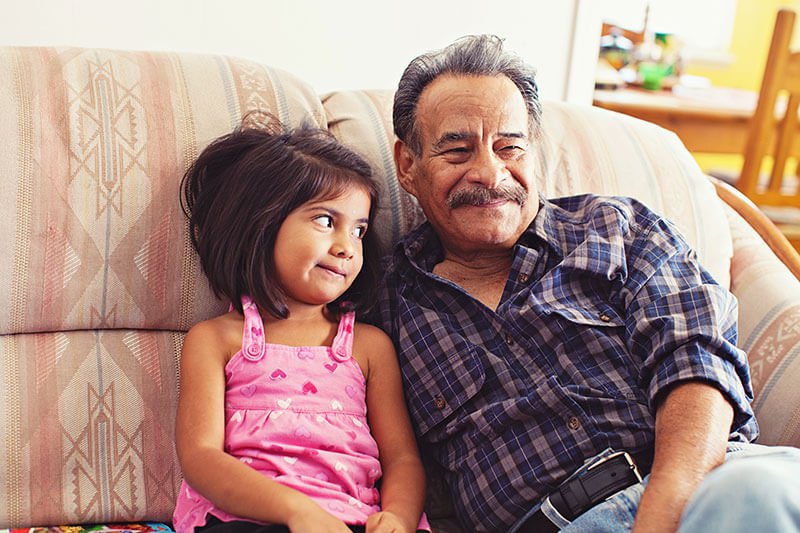
Seneca’s Family Ties program supports successful family functioning when relatives have taken on the temporary or permanent care of kin children whose birth parents are not able to care for them. Often times, relative caregivers require a high level of intervention, community resources, support, and education to keep these children within the family and avoid foster care or the juvenile justice system. Legal guardianship assistance is provided when needed to insure permanency. The goal of this program is to support a stable family environment where children and teens can heal and thrive.
Contact
Children's Mental Health
Seneca offers a wide range of strengths-based and outcomes oriented mental health services that annually reach hundreds children and youth throughout the Central Coast. Our three clinics located in Salinas, King City, and Atascadero are staffed by experienced therapists offering individual, family and group counseling. Our programs build upon and enhance the strengths of children and families, accelerating their progress toward attaining stability, self-sufficiency, and long term success. Services are provided in English and Spanish.
D'Arrigo Children’s Mental Health Clinic:
124 River Road, Salinas, CA 93908 • (831) 455-4770
King City Child and Family Development Center:
1180 Broadway Street, King City, CA 93930 • (831) 386-3940
Atascadero Clinic:
6850 Morro Road, Atascadero, CA 93422 • (805) 434-2449
Mobile Crisis Response Team
If you or a youth you know is actively experiencing a mental health crisis, call (831) 687-4379 for immediate assistance. A team of professionals will assist you over the phone and in person right away. Anyone in Monterey County between the ages of 0-21 can use this service.
In partnership with Monterey County Behavioral Health, Seneca's Mobile Crisis Response Team is an on-call unit of mental health professionals providing crisis intervention to youth experiencing an immediate crisis. The team responds to calls in schools, homes, youth centers, and other community locations to respond to any youth actively experiencing a crisis. The program's goal is to reduce unnecessary psychiatric hospitalizations, decrease unnecessary police involvement, keep children with their biological families, and decrease placement changes for children not living with their biological parents.

Wraparound
Seneca offers intensive “Wraparound” services to children and youth at risk of losing placement or stepping down from a high level of care back into their home or community environments. The Wraparound programs are strength-based, family-driven, flexible and creative, with the goal of helping the family develop the skills and supports to prevent or reduce the possibility of loss of placement or a higher level of care for the youth.
A family-based team addresses the needs of the entire family, not just the at-risk child. This family team consists of family members, natural supports, various community partners such the Department of Social Services or Probation and Seneca’s Care Coordinators, Parent Partners, Permanency Specialists and Support Counselors.
Enhanced Care Management
Enhanced Care Management (ECM) is a Medi-Cal based case management sevice that provides care in a way that meets youth and families wherever they are—in their homes and communities—outside the traditional clinic setting. The goal is to provide medical and mental health services to those with the highest needs in settings that serve them best. ECM provides a dedicated Lead Care Manager that offers extra support and works with the individual, their current doctors, and other health care providers to help deliver the care that is needed.
Contact
Training
The issues surrounding adoption, foster care, and relative care are complex and lifelong for families. Seneca provides a variety of trainings that give parents and professionals the tools they need for success.
To register for a training, class, or support group, please visit our training calendar.

Get Involved
Donate >>>
Donate Crypto >>>
Follow Us on Social Media >>>
Sign Up for Our Newsletter >>>
Careers >>>
Volunteer >>>
Your opinion matters to us, and we want to hear from you! Please take a few minutes to complete our donor survey by clicking the button below. Your participation in this survey allows us to better communicate with you regarding how your support makes an impact and will help us increase our efficiency in keeping you up to date with our work.
Donor Survey